What is Meta’s ad-free subscription, and what is a “pay or consent” model?
Meta’s ad-free subscription is a paid tier that lets users in the EU, EEA and Switzerland use Facebook and Instagram without personalised advertising. Users who do not pay keep seeing personalised ads. “Pay or consent” is the name regulators and privacy advocates give that structure.
Meta introduced it in November 2023 as a compliance route under EU law, arguing that a paid alternative makes consent a genuine choice rather than a condition of access. Privacy advocates read it as consent bought under pressure. The useful question for marketers is what the model does to your measurement either way.
Why do privacy advocates object to the Meta consent model?
The objection is about the nature of consent, not the price. Under GDPR consent must be freely given. Critics argue that when the alternative is a recurring payment, consent is purchased rather than free, and data protection becomes a paid feature. The original complaints came from privacy advocacy groups, and a coalition of civil society organisations signed an open letter against the model. Their concern is precedent: at Meta’s scale, a structure found lawful becomes the web’s default template.
The counter-argument deserves stating fairly. Advertising funds free access, and paid ad-free tiers are unremarkable on news sites and streaming services. What makes Meta’s version contested is the scale of the audience and the depth of the profile involved.
Where does the regulation stand?
The European Data Protection Board has said that large online platforms generally cannot rely on consent or pay for valid consent without offering an equivalent free alternative without behavioural advertising. The Digital Markets Act separately restricts gatekeepers from combining personal data across services without real consent.
In April 2025 the European Commission found Meta’s consent-or-pay model non-compliant with the Digital Markets Act and fined Meta 200 million euros, on the basis that Meta offered no equivalent less-personalised free alternative, so consent was effectively coerced. Meta had already cut the subscription price by roughly 40% from its original level in November 2024. From January 2026 it began offering EU users a version of Facebook and Instagram with less personalised advertising, and that revised model remains under Commission review.
So: a decision against the original structure, an open review of the replacement, and no final legal outcome to plan against. Only the direction is consistent, which is the argument for planning around the measurement consequence.
What happens to measurement when a slice of users pays to opt out?
A paid ad-free tier creates a population that is commercially active and measurement-invisible. They still browse and still buy. What they stop generating is the ad-side signal platform reporting depends on.
Your addressable audience shrinks before your budget does. Subscribers cannot be reached with personalised advertising on that platform at all, so reach and frequency stay internally consistent while describing a smaller share of your market. Nothing in the dashboard flags the change.
The remaining audience is not a random sample. People who pay to remove ads are more privacy-aware, often higher-income, often heavier users. If that group correlates with your best customers, and in premium categories it frequently does, platform-reported performance is measured on a skewed remainder. The bias is invisible because the report still balances.
Your own conversion record stays complete. The orders still land in your commerce system. What breaks is the join between the order and the media that caused it, so cost per acquisition on the tracked subset can fall while the real cost of a customer does not move.
How much of the journey do you actually see?
Paid opt-out is one layer on a stack that was already lossy.
| Where the record breaks | What it removes | Your own order record |
|---|---|---|
| Cookie consent declined | On-site behaviour and campaign tagging for that visit | Intact |
| Browser tracking prevention | Cross-site identifiers and longer attribution windows | Intact |
| App permission prompt declined | In-app ad exposure and post-click linkage | Intact |
| Paid ad-free tier | All personalised ad exposure for that user, indefinitely | Intact |
Businesses track on average around 70% of users. Some track less than half, others get close to 90%. Depending on market, audience and setup, some businesses might miss up to 50% of their data.
The number that matters is not whether your coverage is perfect, it is whether you know what it is. A channel comparison resting on roughly 70% of journeys is one you can weight your confidence against. A coverage figure nobody has measured turns a data gap into a performance result.
One check tells you where you stand. Compare orders in your commerce system against attributed conversions per ad platform, by market and month. That gap is your coverage gap, and its trend matters more than its level.
Why does “pay or consent” push toward first-party measurement?
Because every version of the outcome reduces the reliability of platform-side reporting, and none of them touch your own data. If regulators hold the line, platforms must put a genuinely less-tracked free option beside the paid one, which means more untracked users. If the revised model is accepted, a paying cohort stays permanently outside the ad-side record.
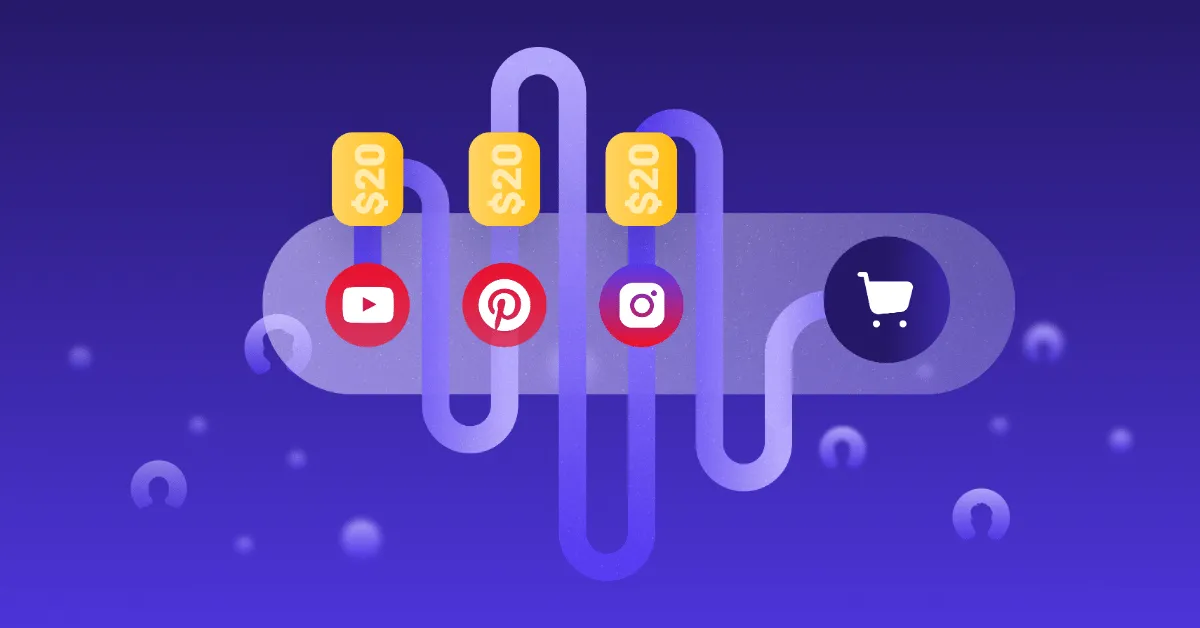
Independent attribution replaces platform self-reporting. Ad platforms each count the conversions they believe they influenced, so adding the dashboards together produces a total above the revenue you booked. An independent model counts each conversion once and splits it, giving one number that reconciles with finance. Roivenue client data shows over 50% of revenue is misattributed under last-click models, before consent loss. How multi-touch attribution works covers the method, this guide to attribution models the trade-offs.
Cost and impression data still comes from the platforms. Spend, impressions and delivery metrics have to be harmonised into one table with your own order data, a connector problem rather than a consent problem: Roivenue maintains integrations with 70+ platforms. Impressions are also what let upper-funnel activity be valued at all. Orange found that once ad impressions entered the model, channels that had looked marginal were driving the pipeline and revenue doubled.
The model has to degrade predictably, telling you when a journey exceeded what it could observe rather than silently trimming it. Measurement without third-party cookies sets out what holds up, and measuring upper-funnel activity covers the channels hit hardest.
What this does not fix
It does not recover the lost users. Someone who pays to remove ads generates no ad-side touchpoint, and no modelling brings that back. What first-party measurement gives you is a complete conversion record and an honest account of how much of the journey you see.
It does not answer incrementality. Attribution describes patterns across observed journeys. It cannot tell you what would have happened without the ad. That needs holdout tests or media mix modelling, and consent loss makes real experiments more valuable, not less. How attribution, MMM and experiments fit together.
It does not make platform reporting go away. You still buy media inside platform interfaces and still optimise against platform signals. What changes is which number you trust when reallocating budget.
Compliance is not a measurement feature. Lawful data handling is an obligation you own, whatever tooling sits on top. Roivenue is ISO 27001 certified, which describes how data is handled, not whether your consent basis is valid.
Explaining a widening attribution gap to a board is the CMO view of the same problem.
Frequently asked questions
What does “pay or consent” mean?
A choice where a user either consents to tracking-based advertising or pays to avoid it. Regulators also call it “consent or pay”. The contested question is whether consent given to avoid a charge is freely given under GDPR.
Is Meta’s pay or consent model legal in the EU?
The original version was found not to be. In April 2025 the European Commission found it non-compliant with the Digital Markets Act and fined Meta 200 million euros, because Meta offered no equivalent less-personalised free alternative.
From January 2026 Meta began offering a less-personalised-advertising version, still under Commission review. Treat the legal position as open.
Why do privacy advocates criticise the Meta consent model?
Because privacy advocacy groups argue it makes data protection conditional on payment: consent given to avoid a fee is not freely given, and allowing it at Meta’s scale sets a template other platforms copy.
How does Meta’s subscription model affect ad targeting?
Subscribers are not addressable with personalised advertising on Meta’s platforms, so your reachable audience in affected markets is smaller than the total user base. Platform-reported reach describes the non-subscribing remainder.
Does the subscription model break attribution?
It degrades one part of it. Ad-side touchpoints from subscribers do not exist, so those journeys are incomplete.
Your own conversion record is unaffected, so the effect is a widening gap between the orders you see and the media you can credit.
What share of users can a business actually track?
On average around 70%. Some track less than half, others close to 90%, and the spread comes down to market, audience, app-versus-web mix and how well the setup is maintained. Your own figure matters more than the average.
45 minutes on relevant demo data, with a summary for Finance.