When UPC Slovakia, one of the country’s leading internet and TV providers, looked at their digital marketing mix, the question seemed simple – yet crucial. With budgets spanning Google Ads, Meta, TikTok, Sklik, and Adform, they wanted to know: Are we really getting out what we put in? Like many large advertisers, UPC faced a classic performance dilemma. Their marketing investment had grown year over year, but visibility into the true efficiency of each channel was limited. What would happen if they turned the dial down? Would results collapse or could smarter allocation improve performance?
“We use plenty of channels, but the direct relationship between spend and performance wasn’t always clear,” says Denis Nemšák, Data-Driven Growth & Strategy Leader at UPC Slovakia. “It was a fascinating challenge. We wanted to understand how far we could go – without a crystal ball.”
From Attribution to Action
UPC connected website data throughout Google BigQuery, media platforms, and their order management system to build a complete, unified view of marketing ROI, including profit margins and customer lifetime value.
That foundation set the stage for something bigger. Using Roivenue’s AI-driven model, the teams worked together to simulate how different levels of spend would impact outcomes across channels. Instead of guessing, UPC could finally forecast – not just measure – performance. In practice, this meant identifying where extra euros were wasted, where they could safely pull back, and which under-appreciated channels had untapped potential.
Smart Shifts, Bold Decisions
The first big experiment started in late 2024. Using data-driven insights, UPC began a careful process of optimization across all their paid media. The results were as surprising as they were effective.
1. Performance Campaigns: Doing More with Less
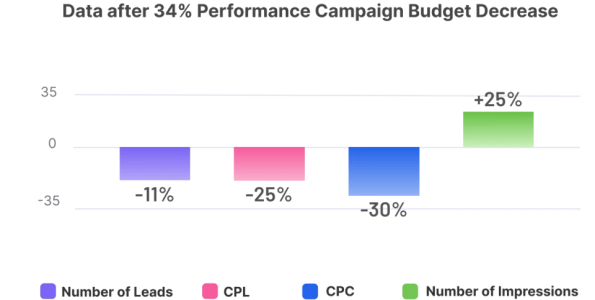
UPC reduced their performance campaign budget by 34%, expecting a proportional decline in leads. Instead, the number of leads dropped by only 11%, while cost per lead decreased by 25% and CPC by 30%. Even more impressively, impressions grew by 25%. The takeaway? Efficiency gains could offset most of the spend cuts, and in some cases, even expand reach.
2. Search + Organic: Paying Less, Ranking Higher
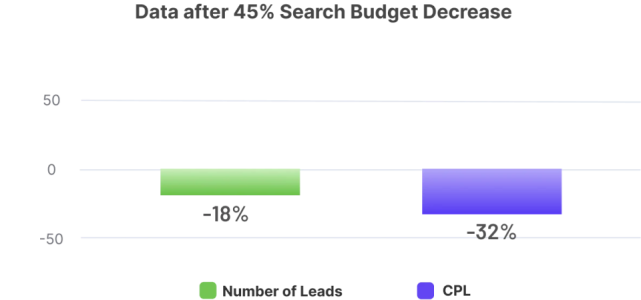
Next, attention turned to Search. Over several months, the Search budget was reduced by 45%, while leads decreased by only 18%. Thanks to consistent optimization – removing low-value keywords, improving targeting, and focusing on high-intent phrases, the cost per lead dropped by 32%. Much of the saved budget was effectively absorbed by organic search, which maintained the same impression levels, creating a healthier long-term balance between paid and organic visibility.
3. SmartDisplay: The Hidden Gem
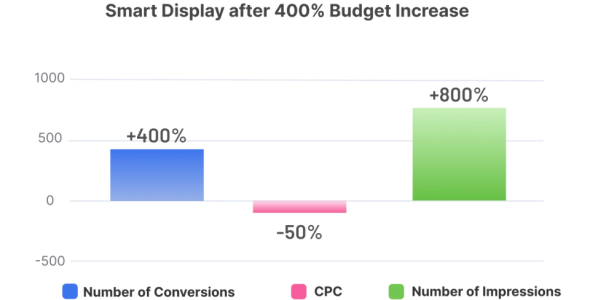
The data revealed an unexpected hero – SmartDisplay. Historically seen as a low-performing format, regression analysis inside Roivenue showed it actually had strong conversion potential. So UPC reallocated part of their Performance Max budget to SmartDisplay, increasing its spend fivefold. The results were stunning: conversions increased fivefold, CPC dropped by 50%, and impressions surged by 800% – all at the same conversion cost.
4. Performance Max: Leaner and Smarter
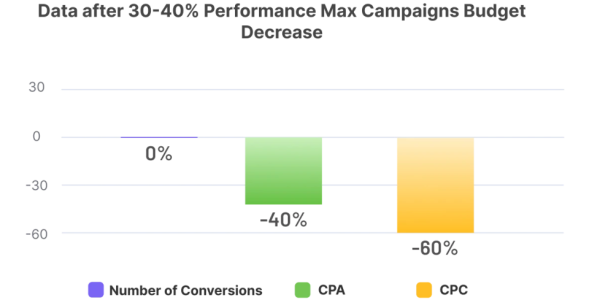
Meanwhile, the Performance Max campaigns were streamlined, with budgets reduced by 30–40% and partially moved into SmartDisplay. Despite the cuts, conversions remained steady, cost per acquisition fell by 40%, and cost per click by 60%.
5. Meta: Focus on What Works
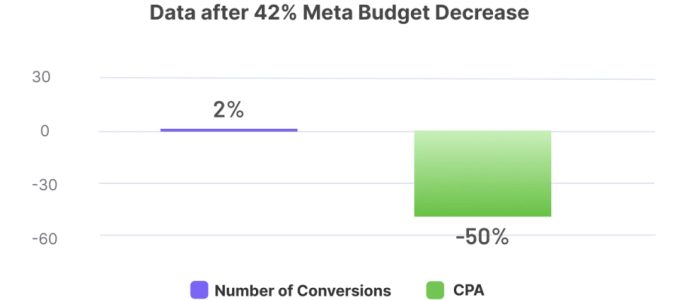
Finally, UPC turned to Meta (Facebook & Instagram). With a 42% budget reduction, conversions not only held steady – they even rose slightly during awareness pushes in major cities. The cost per acquisition dropped by 50%, aided by a strategic shift away from Instagram and stronger focus on high-value audiences on Facebook.

Smarter Budgets, Sustainable Growth
By the summer of 2025, the results spoke for themselves. Across all key platforms, UPC had reduced total spend dramatically while maintaining, and in some areas improving, marketing output. The collaboration with Roivenue proved that smarter decisions based on data-driven forecasting can achieve what intuition alone cannot: cutting waste while amplifying performance.
“The insights from Roivenue gave us confidence to make bolder moves,” Nemšák reflects. “We saw where we could pull back and where to double-down — with precision we never had before.”
The Bottom Line
- –34% total performance budget
- –25% cost per lead
- –30–60% lower CPC across key channels
- +25% impressions despite reduced investment
- 5× increase in SmartDisplay conversions
Conclusion
UPC Slovakia’s story is a clear demonstration that optimization is not just about cutting costs, it’s about investing smarter. By combining reliable attribution data with predictive modeling from Roivenue’s Budget Optimizer, they turned uncertainty into strategy, and complexity into clarity. As a result, UPC didn’t just spend less – they learned more about what truly drives their growth.
Take your marketing to the next level!
Schedule a call with our team today.
